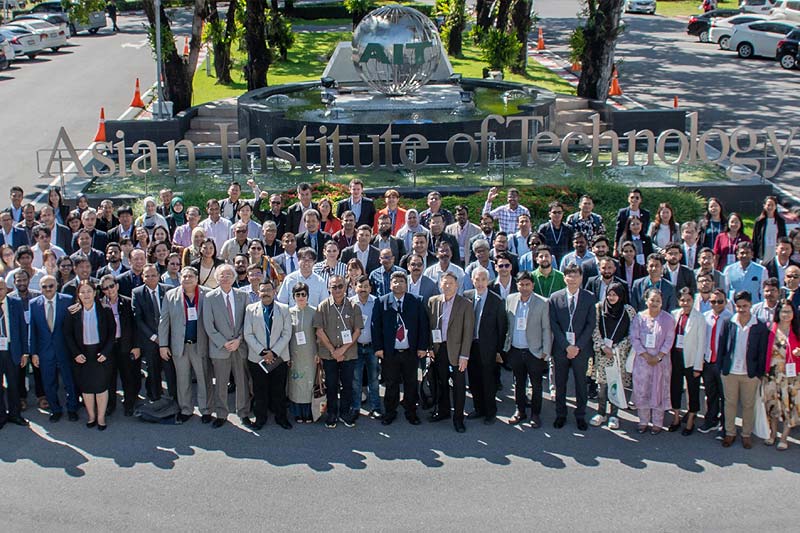
The 4th International Symposium on Disaster Resilience and Sustainable Development (DRSD 2025), organized by the Asian Institute of Technology (AIT), aims to bring together global experts, practitioners, policymakers, and students from the Asia-Pacific region and beyond.
24 - 26 November 2025 AIT, Thailand

Disaster risk has become more complex due to the impending effects of climate change, disruptive technology, rapid infrastructure development, and growing anthropogenic pressures. Under current development pathways, we should prepare to face the possibility of more compounding hazards and complex risk landscapes in the future.
The “4th International Symposium on Disaster Resilience and Sustainable Development”, referred to as DRSD 2025, organized by the Asian Institute of Technology, gathers experts, practitioners, policymakers, and students from Asia Pacific and beyond to present a discourse on improving development practices to reduce long-term complex risks and promote equitable sustainability. With wide-ranging thematic areas and diverse participation, DRSD 2025 is well placed to explore the complex challenges faced by Asia Pacific and beyond and collaborate for effective solutions.
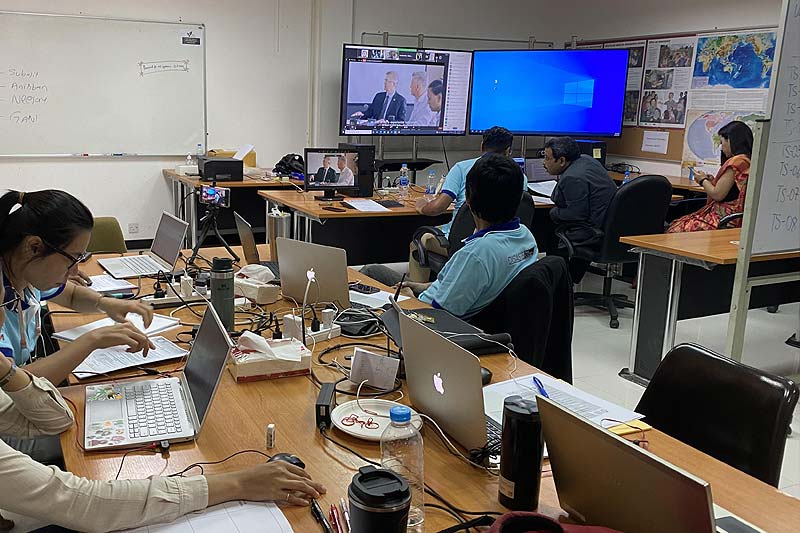
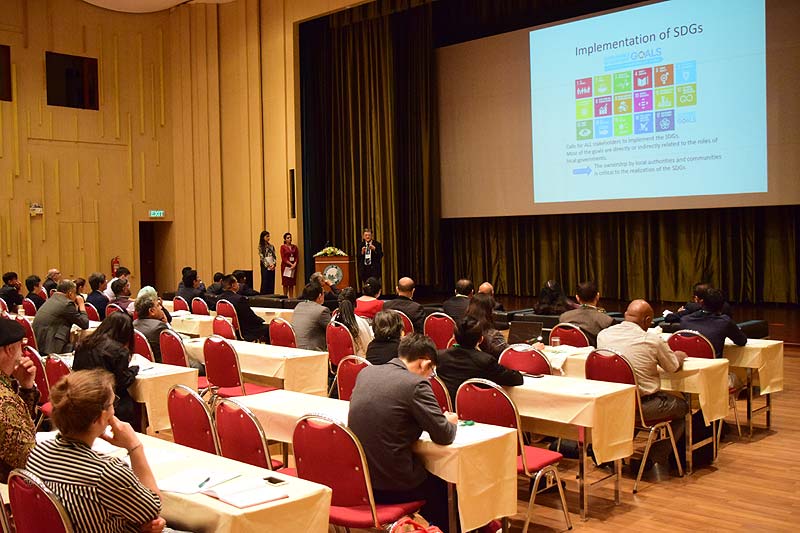
The DRSD 2025 Symposium will take place from 24–26 November 2025 in a hybrid format, offering both on-site and online participation options. Online participants will have access to live streams of all plenary sessions (keynotes and panel discussions). Thematic Technical Sessions will be conducted in two separate tracks for on-site and online participants. DRSD 2025 will also serve as a platform for participants to build new networks and partnerships or strengthen existing ones to enhance future collaboration opportunities.
The symposium aims to foster critical discourse on enhancing development practices to reduce systemic and long-term disaster risks while promoting inclusive and equitable sustainability. With a comprehensive range of thematic areas:
Climate change impacts on socio-ecological systems, ecosystem services, livelihoods and built environment
Ecosystem-based adaptation and nature-based solutions
Traditional and indigenous knowledge and practices in EbA and NBS
Climate change adaptation policies and practices
Incident Command System - lessons and advancements.
Use of innovations, technology and data for delivering emergency response and humanitarian assistance.
Migration and displacement in post-disaster and climate change contexts
Gender, inclusion and social protection in post-disaster settings
Post-disaster reconstruction and recovery
Climate induced risks and vulnerabilities of critical infrastructure
Physical and functional resilience of critical infrastructure
Building resilient critical infrastructure through innovative approaches, tools and technologies
Resilience and sustainability of built environment
Nature based and nature positive solutions for built environment and infrastructure resilience
Innovative approaches, data and tools for infrastructure monitoring and risk management
Climate change and anthropogenic impacts on mountain socio-ecological systems
Glacial hazard and risk assessment
Early warning systems and technologies in mountainous terrain
Implementing novel approaches and tools for climate resilience in mountain regions
Risk communications and response system for mountain community resilience
Assessing and modelling coastal hazards and risks
Delta and estuary socio-ecological systems and resilience building
Green, grey, and hybrid engineering in coastal protection
Coastal zone management, planning and development
Remote Sensing and Geospatial Technologies for Hazard Detection and Disaster Management
Big Data Applications in Ocean and Atmospheric Monitoring
Advancements in Numerical Ocean and Atmospheric Modeling for Meteorological Forecasting
Disruptive Technology for Disaster Risk Reduction
Early Warning Systems and resilience building
Integrating Remote Sensing and Big Data in Decision Support Systems for Anticipatory Action
Adaptive governance and decision making in emergencies
Transboundary and international co-operation frameworks in DRR/CCA
Community based approaches and engagement for disaster risk management
Public Private Partnership and financing for DRR
Parametric insurance and risk-transfer mechanisms
Assessing direct and indirect economic impact of disasters.
Higher education and sustainability pathways
Community-led sustainability initiatives
SDG achievements and challenges
Green finance and sustainable investment
Urban resilience and inclusive growth
Interdisciplinary approach for resilience building
The conference is open to academics, practitioners, students, public officials, private institutions, non-governmental organisations, and intergovernmental organisations within the disaster risk reduction and sustainable development sectors. Participants from Asia Pacific and beyond are open to join.
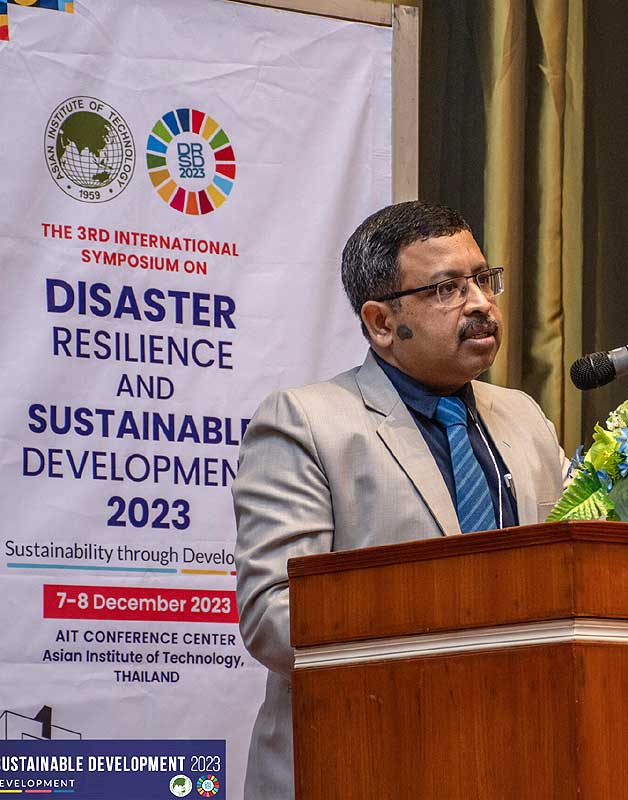


Disaster Resilience and Sustainable Development 2025 "DRSD 2025" is the fourth international symposium organized by Asian Institute of Technology, Thailand in association with partner institutions of the region.
The symposium will be held on 24 - 26 November 2025 at the AIT Conference Centre, Asian Institute of Technology, Thailand.
Yes. DRSD 2025 will be held in a hybrid format with both on-site and online participation options.
All academicians, scientists, engineers, research scholars, students, practitioners, policy makers, emergency managers and representatives from development agencies, private sector, govt. and non-govt. organisations working in the field of disaster risk management, climate change adaptation and sustainable development can participate and present during the symposium.
Yes. You can present your research upon acceptance by the DRSD 2025 committee. However, you will need to attend the symposium either in-person or online to present.
You can submit your abstract in the 'Abstract Submission' tab at the symposium website.